
Wildlife Guide
Where Do Lions Live?
Explore savannas, grasslands, open woodland, dry forest, and the remaining ranges that shape lion habitat.
Back to guidesLions Are Mostly African Big Cats Today
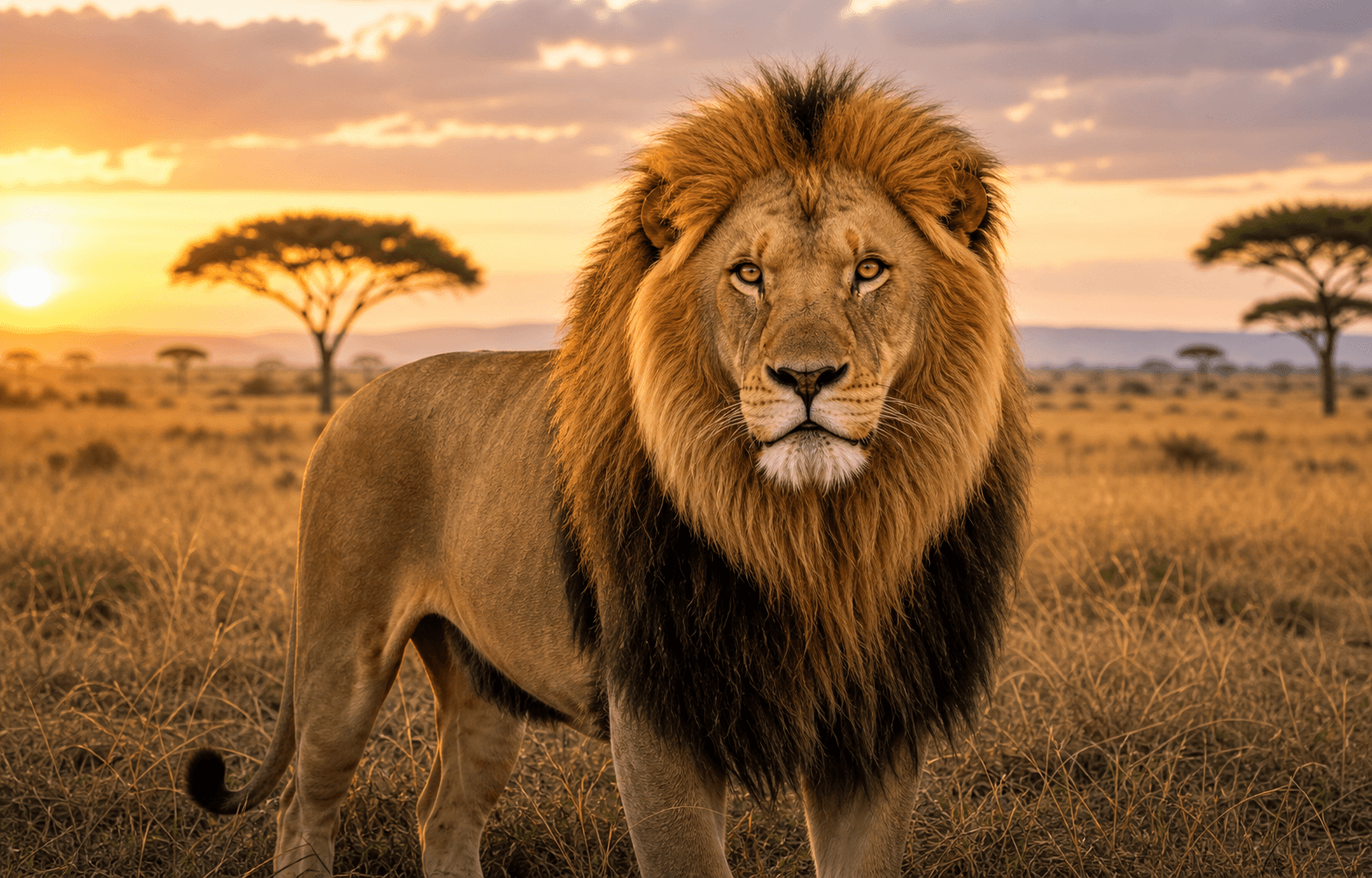
Wild lions live mostly in sub-Saharan Africa today, with a small remaining population of Asiatic lions in India. Historically, lions lived across much larger parts of Africa, the Middle East, and parts of Asia and Europe. Modern lion range is far more limited and fragmented. This means a map of lion habitat is really a map of remaining strongholds rather than the full historic story.
Lions are strongly associated with savannas and grasslands, but they are not limited to one kind of open plain. They can use open woodland, scrub, dry bush, floodplains, and semi-arid landscapes when there is enough prey, cover, and space. Their habitat needs are shaped by hunting, pride structure, water availability, and coexistence with people and livestock.
Lion Habitats
Savannas, Grasslands, and Open Woodland
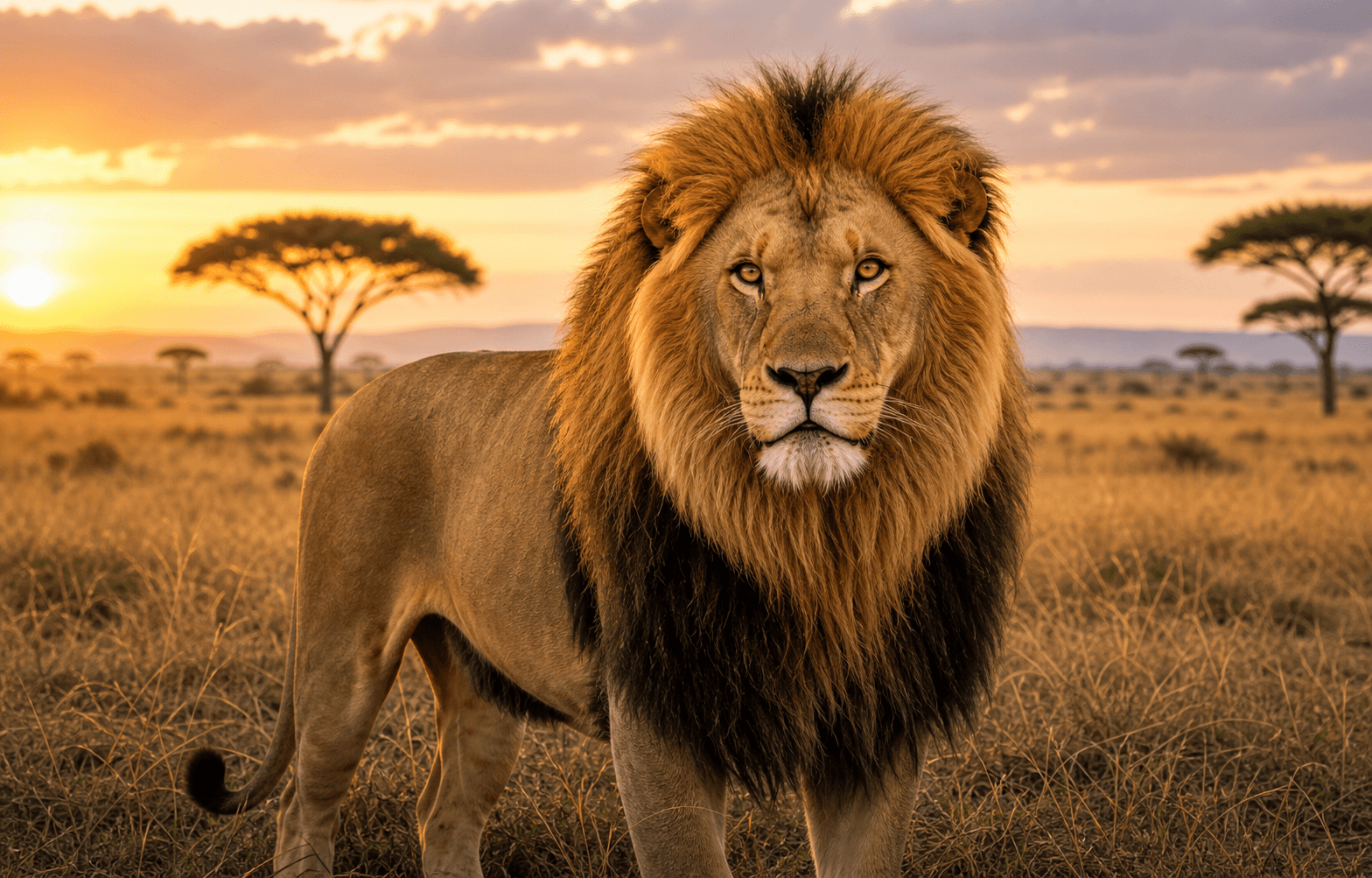
Savannas are important lion landscapes because they support herds of grazing animals and provide visibility for group hunting. Lions often rest in shade during hot parts of the day and become more active during cooler hours. Open woodland and scrub can also be useful because cover helps lions approach prey while still allowing movement across large territories.
Grassland does not mean empty land. A healthy savanna includes grasses, trees, seasonal water, insects, birds, herbivores, predators, and scavengers. Lions fit into this system as social hunters and scavengers. Their presence can influence how prey animals move and where other carnivores feed or avoid competition. In many places, shade trees, riverbeds, termite mounds, and thickets become important resting or watching spots within a much larger open habitat.
Savannas and Open Woodland
African lion landscapes often include grass, shade, water access, prey movement, and open woodland where prides can rest and hunt.
Dry Forest and Scrub Edges
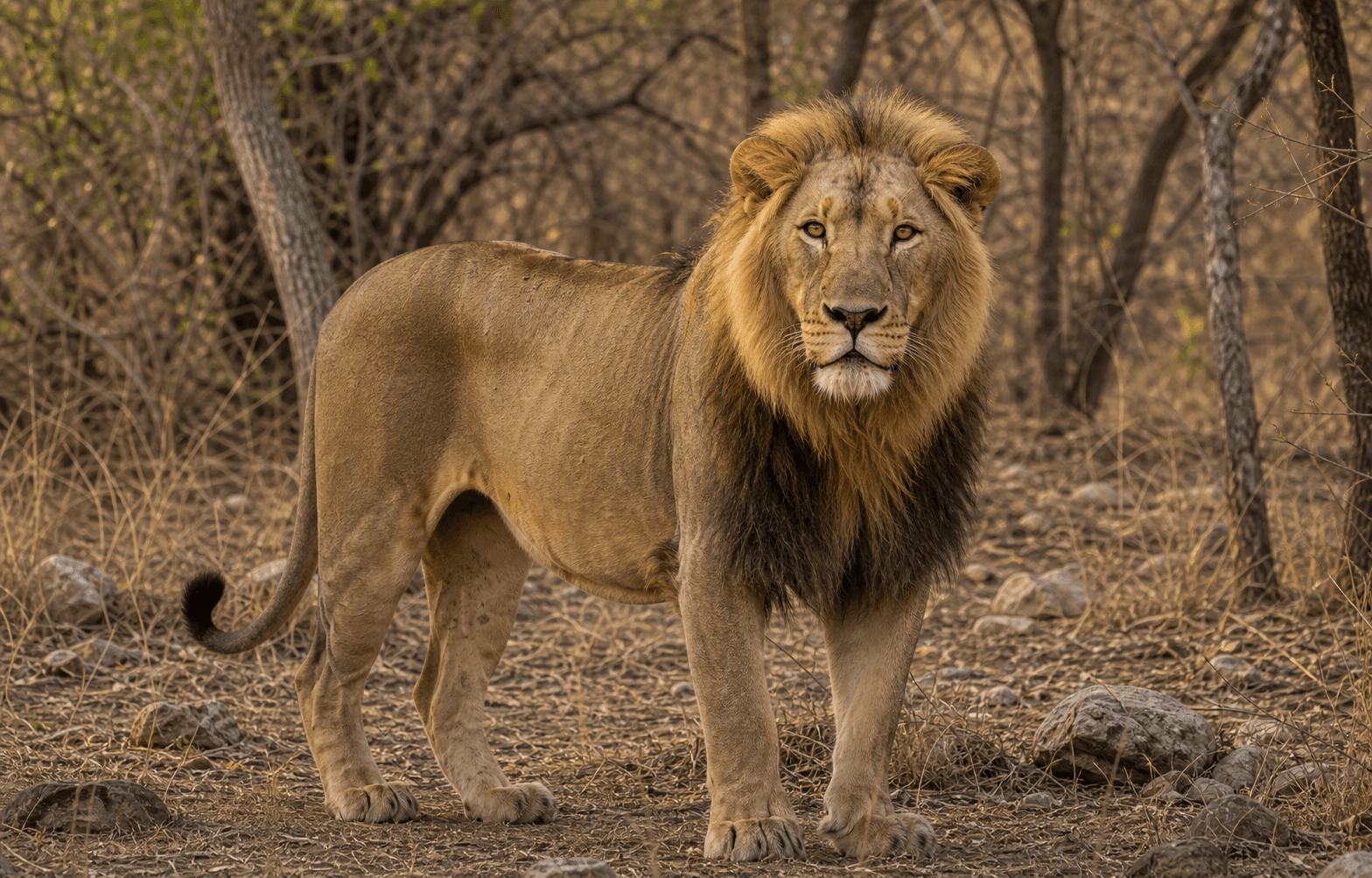
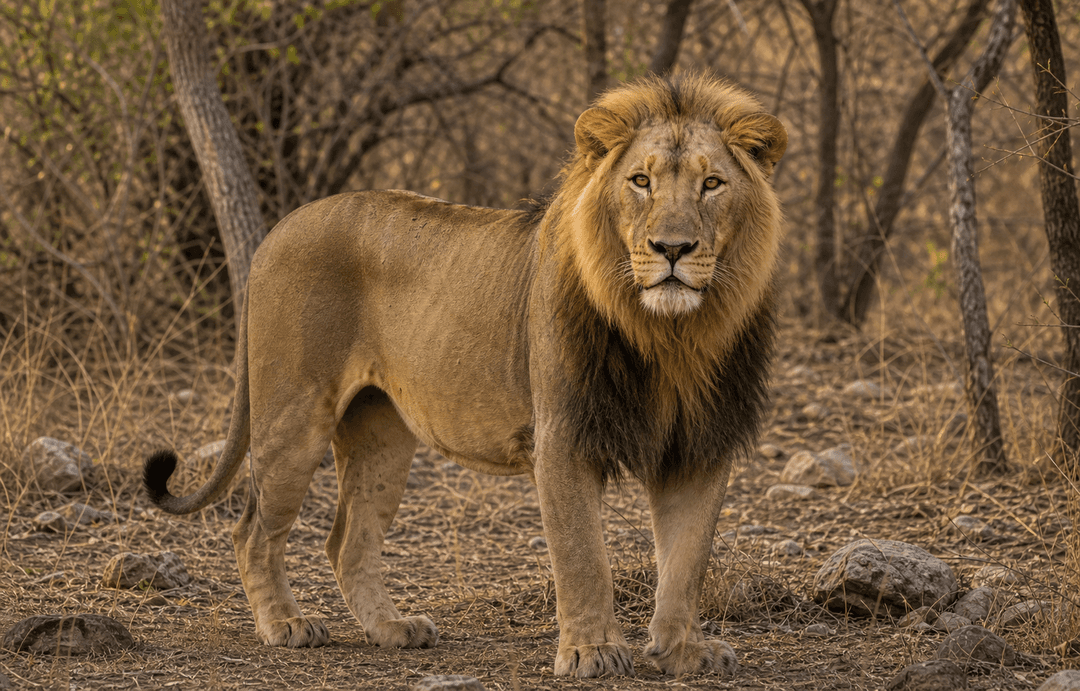
Asiatic lions show that lion habitat can include dry forest, scrubland, and grassland edges when protection and prey support a small range.
Featured Types
Two Lions With Different Habitat Stories
Regional Examples
Regional Examples
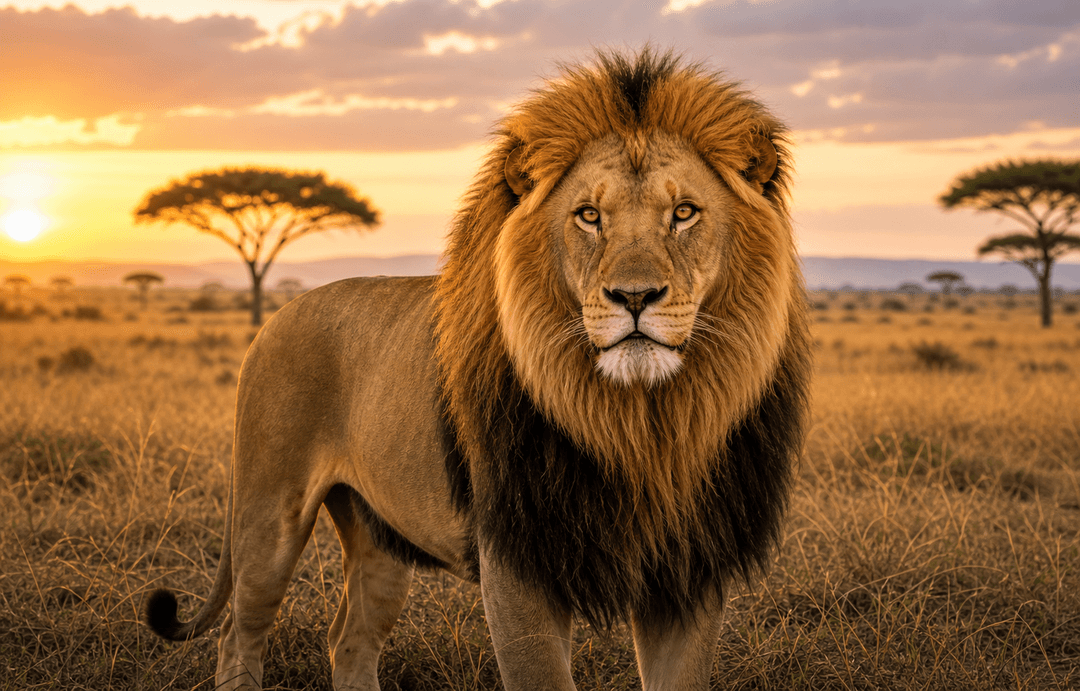
East Africa is famous for lion landscapes in places such as the Serengeti, Maasai Mara, and other savanna systems. Southern Africa includes important lion areas in countries such as Botswana, South Africa, Namibia, Zimbabwe, and Zambia. West and Central African lion populations are more fragmented and often face stronger conservation pressure.
India's Gir Forest region is home to the remaining wild Asiatic lions. This population shows that lions are not only animals of wide-open African plains. They can use dry forest and scrub landscapes when prey, protection, and management support them. Still, because the remaining Asiatic lion range is small, it is often discussed separately from African lion range.
Why Lion Range Has Shrunk
Lion range has shrunk because of habitat loss, prey decline, conflict with people, disease concerns, and fragmentation. Lions need space, and space is difficult to protect where human populations, farms, roads, and livestock areas expand. When prey animals decline, lions may come into conflict with livestock owners, which can create serious conservation challenges.
Protected areas help, but lions do not understand park boundaries. Some populations need connected landscapes that allow movement between reserves and community lands. Conservation is not only about lions. It also involves local livelihoods, livestock protection, tourism, anti-poaching work, prey recovery, and long-term land planning.
Why Lions Are Feared and Admired
Lions are feared because they are large predators with strong bodies, coordinated hunting, and a famous roar. They are also admired because they are social, visible, and deeply woven into human storytelling. The same traits that make lions impressive can make them seem more common or more secure than they really are.
A family-friendly way to understand lions is to separate respect from exaggeration. Lions are dangerous wild animals at close range, but they are not villains. They hunt to live, defend cubs, compete with other predators, and respond to habitat pressures. Their reputation should include both power and vulnerability.
Why Range Maps Are Simplified
A lion range map can show broad areas where lions live or historically lived, but it cannot show every pride boundary, seasonal movement, local conflict zone, or conservation corridor. Lion presence depends on prey, protection, land use, and human tolerance. Some landscapes may look suitable from above but lack enough prey or safe movement routes.
Presence Scores are simplified educational estimates. They are not exact population counts or safety guarantees. BeastAtlas uses them to make range patterns easier to compare, not to make local claims about animal numbers or day-to-day safety.
How Lion Prides Use Space
Lions are social cats, and that changes how they use habitat. A pride may hold an area that includes resting shade, hunting grounds, water access, and routes used by prey. Male coalitions may move across larger areas, especially when searching for territory or competing with other males. Young lions may disperse, which means connected landscapes can matter for long-term population health.
The size and shape of lion space depends on prey density, habitat cover, rainfall, human pressure, and competition with other predators. In a prey-rich savanna, lions may use space differently than they do in a drier, more open, or more fragmented landscape. This is another reason simplified range maps should be read as learning tools rather than exact boundaries.
Lions, People, and Shared Landscapes
Many lion areas are also home to pastoralists, farmers, towns, roads, and tourism routes. Living near lions can bring both benefits and challenges. Wildlife tourism can support conservation and local economies, but livestock losses and safety concerns can create real pressure. Long-term lion conservation often depends on practical coexistence tools, not only protected areas on a map.
Examples include stronger livestock enclosures, community conservation programs, compensation systems, habitat corridors, and education that helps people respond to predators without panic. A family-friendly lion article should celebrate the animal while still recognizing that conservation succeeds only when people living near lions are part of the solution.
Reality Note
Lions are symbols of wild Africa, but they are also conservation-dependent animals in many places. Their future depends on habitat, prey, coexistence, and local communities that can benefit from living near wildlife. The strongest lesson is not that lions are everywhere; it is that remaining lion landscapes matter.
Learning where lions live helps readers understand why protected areas, corridors, and responsible wildlife tourism can be important parts of conservation.
Presence Scores are simplified educational estimates. They are not exact population counts or safety guarantees.