
Wildlife Guide
Great White vs Tiger Shark vs Bull Shark
Compare three famous sharks by habitat, range, reputation, and the ocean context behind their fear factor.
Back to guidesThree Famous Sharks
Great white sharks, tiger sharks, and bull sharks are often grouped together because they are large, powerful, and well known. But they do not use the ocean in the same way. Great whites are commonly associated with cooler, productive coastal waters. Tiger sharks are more tropical and subtropical, often linked with islands, reefs, and warm coastal seas. Bull sharks are famous for tolerating low-salinity water and sometimes moving into river systems.
These differences matter because habitat explains a lot about animal behavior. A great white following seal colonies is using a different world than a tiger shark cruising warm island waters or a bull shark moving through cloudy coastal shallows.
Side by Side
Three Famous Sharks, Three Habitat Stories

Great White Shark
- Habitat / Location
- Cooler productive coasts, islands, continental shelves, and seal-rich waters.
- Behavior / Reputation
- Famous for size, bite force, long-distance travel, and a powerful pop-culture reputation.
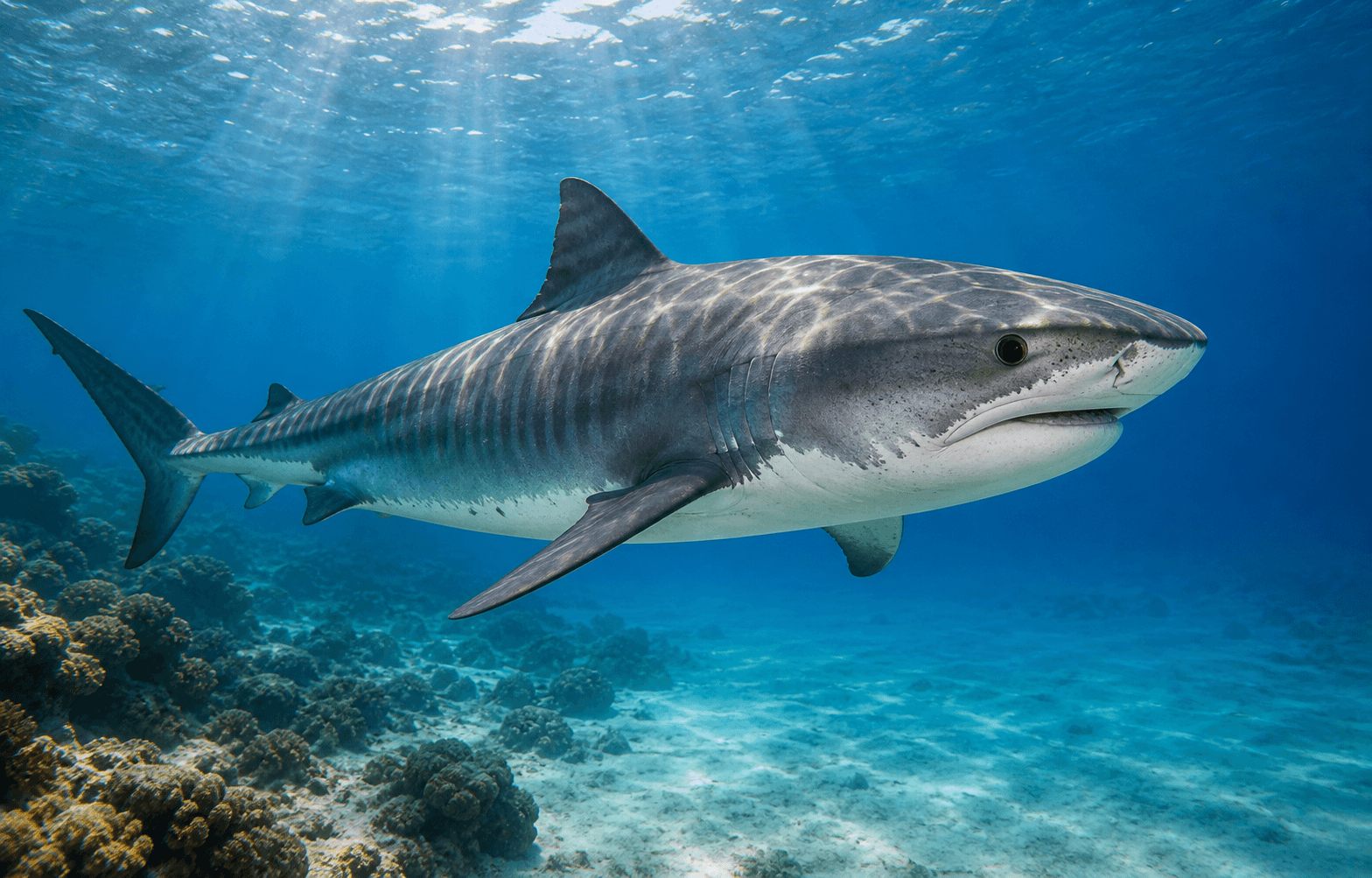
Tiger Shark
- Habitat / Location
- Warm tropical and subtropical seas, reefs, islands, seagrass beds, and coastal shelves.
- Behavior / Reputation
- Known as an adaptable warm-water predator and scavenger with a broad diet.
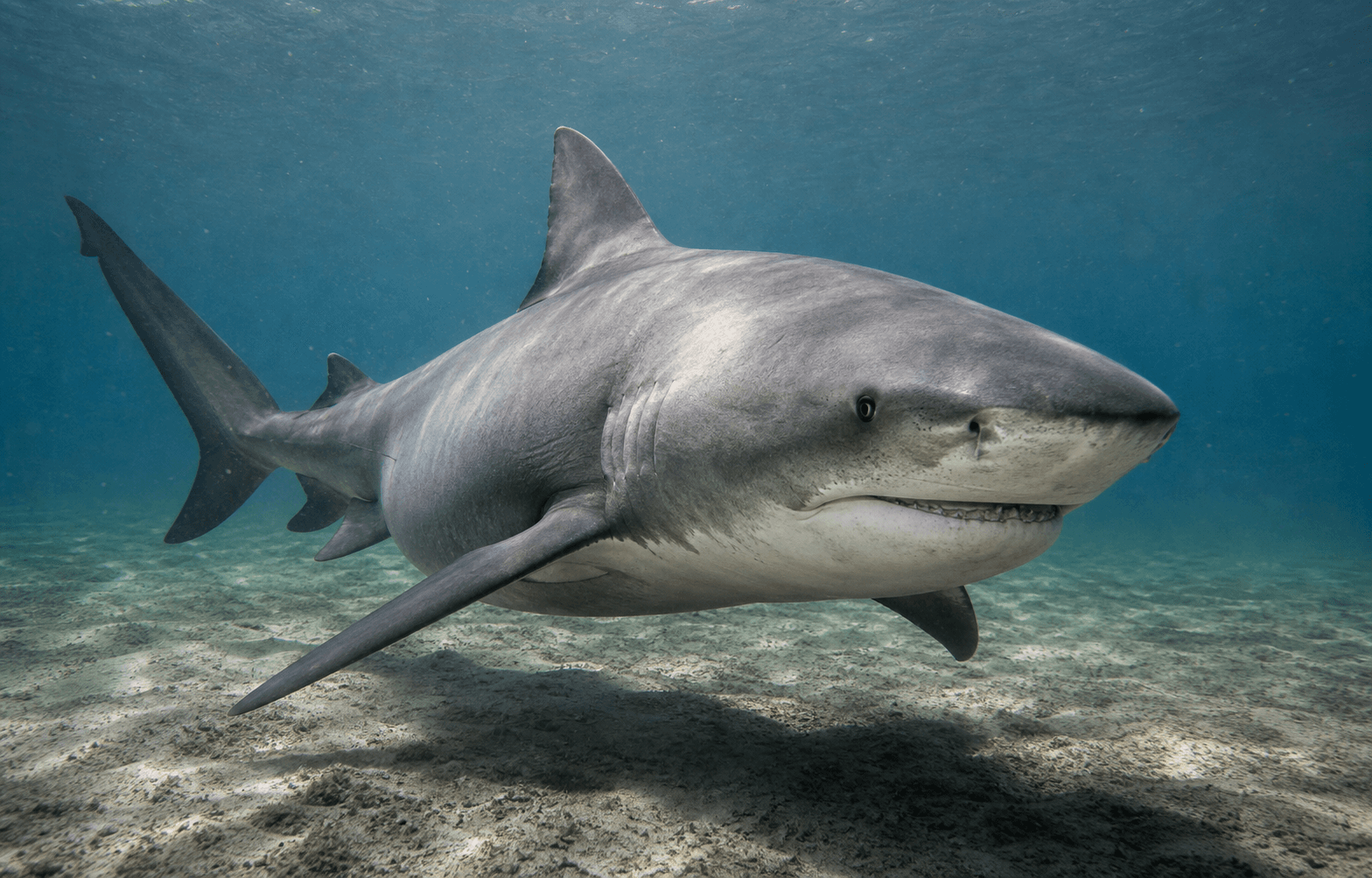
Bull Shark
- Habitat / Location
- Warm coasts, river mouths, estuaries, and low-salinity water near land.
- Behavior / Reputation
- Feared because its nearshore and river-influenced habitat can overlap with people.
Habitat Comparison
How Each Shark Uses the Ocean
Great White Shark Habitat
Great whites often live near continental shelves, islands, and coastlines where prey is abundant. They can travel long distances and dive deep, but they are especially famous in places like South Africa, California, southern Australia, and parts of the northeast Pacific. Their range is shaped by food, temperature, and migration routes.
The great white's fear factor comes from size, bite force, and media attention. In reality, the species is also vulnerable and slow-growing. It is protected or carefully managed in many regions because large sharks can be affected by fishing pressure and slow reproduction.
Tiger Shark Habitat
Tiger sharks are warm-water generalists. They may be found near reefs, seagrass beds, island chains, and open coastal waters. They are associated with places like Hawaii, the Caribbean, parts of Australia, and other tropical or subtropical seas. Their broad diet gives them a reputation as curious feeders, but curiosity is not the same as hunting people.
A tiger shark's habitat often overlaps with rich coastal ecosystems. Reefs, turtle nesting areas, seagrass beds, and island slopes can all be part of its world. This makes tiger sharks important animals in warm marine food webs.
Bull Shark Habitat
Bull sharks are strongly associated with coastal areas, estuaries, river mouths, and murkier nearshore water. Their ability to tolerate freshwater makes them unusual among large sharks. This does not mean they are everywhere in rivers, but it does explain why they appear in places people do not expect sharks.
Because bull sharks may use shallow coastal zones, their habitat can overlap with human activity more than many other shark species. That overlap is one reason they have a strong reputation. It is also why local warnings and conditions matter more than global fear rankings.
Comparison Table
Range, Habitat, Fear Factor, and Reality
Fear vs Context
Why These Sharks Are Feared
All three species are feared because they are large predators and sometimes use habitats where humans swim, surf, fish, or boat. Great whites carry the strongest pop-culture image. Tiger sharks are known for broad feeding habits. Bull sharks are known for coastal and river-influenced water. Those traits are real, but they are often presented without context.
Fear grows when people imagine the ocean as unpredictable and invisible. Education helps by showing patterns: where prey gathers, how seasons affect movement, and how local beach guidance reduces risk. BeastAtlas avoids ranking animals as villains and instead explains how habitat shapes encounters.
Practical Educational Context
If you are visiting shark habitat, the most useful information comes from local beach authorities, lifeguards, park staff, or wildlife agencies. They understand current conditions, recent sightings, fishing activity, weather, and water visibility. A broad guide can teach range and ecology, but it cannot provide real-time safety decisions.
Presence Scores are simplified educational estimates. They are not exact population counts or safety guarantees.
Reality Note
Great whites, tiger sharks, and bull sharks deserve respect, but they are also important wildlife. They help shape marine ecosystems and remind us that oceans are living habitats, not swimming pools. Understanding the differences between them makes fear more specific, more accurate, and less exaggerated.
Related BeastAtlas Pages
Presence Scores are simplified educational estimates. They are not exact population counts or safety guarantees.