Wildlife Guide
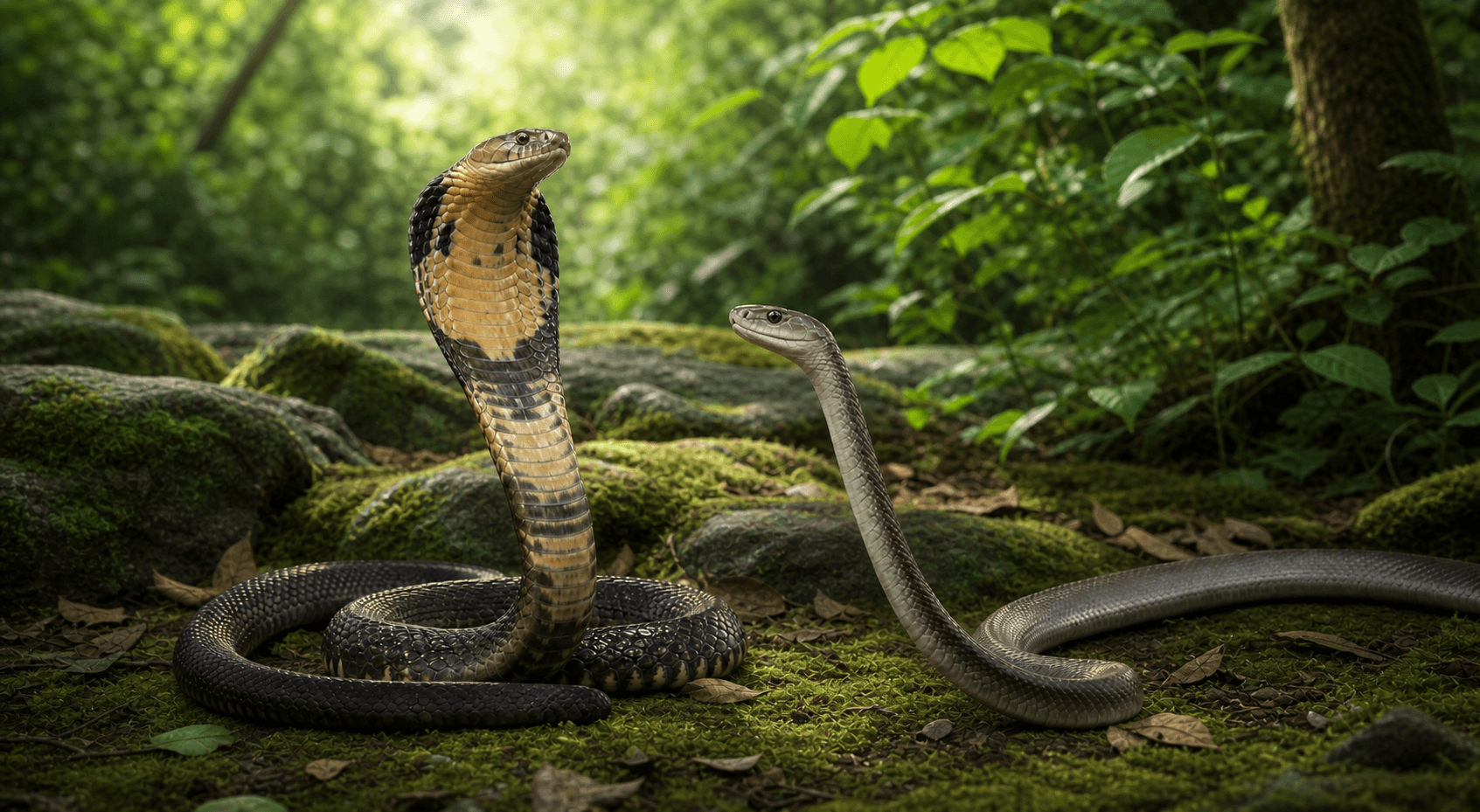
King Cobra vs Black Mamba
A calm comparison of two famous venomous snakes: where they live, how they behave, and why both are often misunderstood.
Back to guidesTwo Famous Snakes, Two Different Worlds
King cobra and black mamba are both famous, but they live in different places and behave differently. King cobra is mainly Asian and often linked to forests, wetlands, bamboo thickets, plantations, and farm edges.
Black mamba is African and often linked to savannas, rocky hills, scrub, and open woodland. Both are respected because of venom, size, and reputation, but both are often exaggerated in stories and videos.
Side by Side
Two Powerful Snakes, Different Habitat Stories
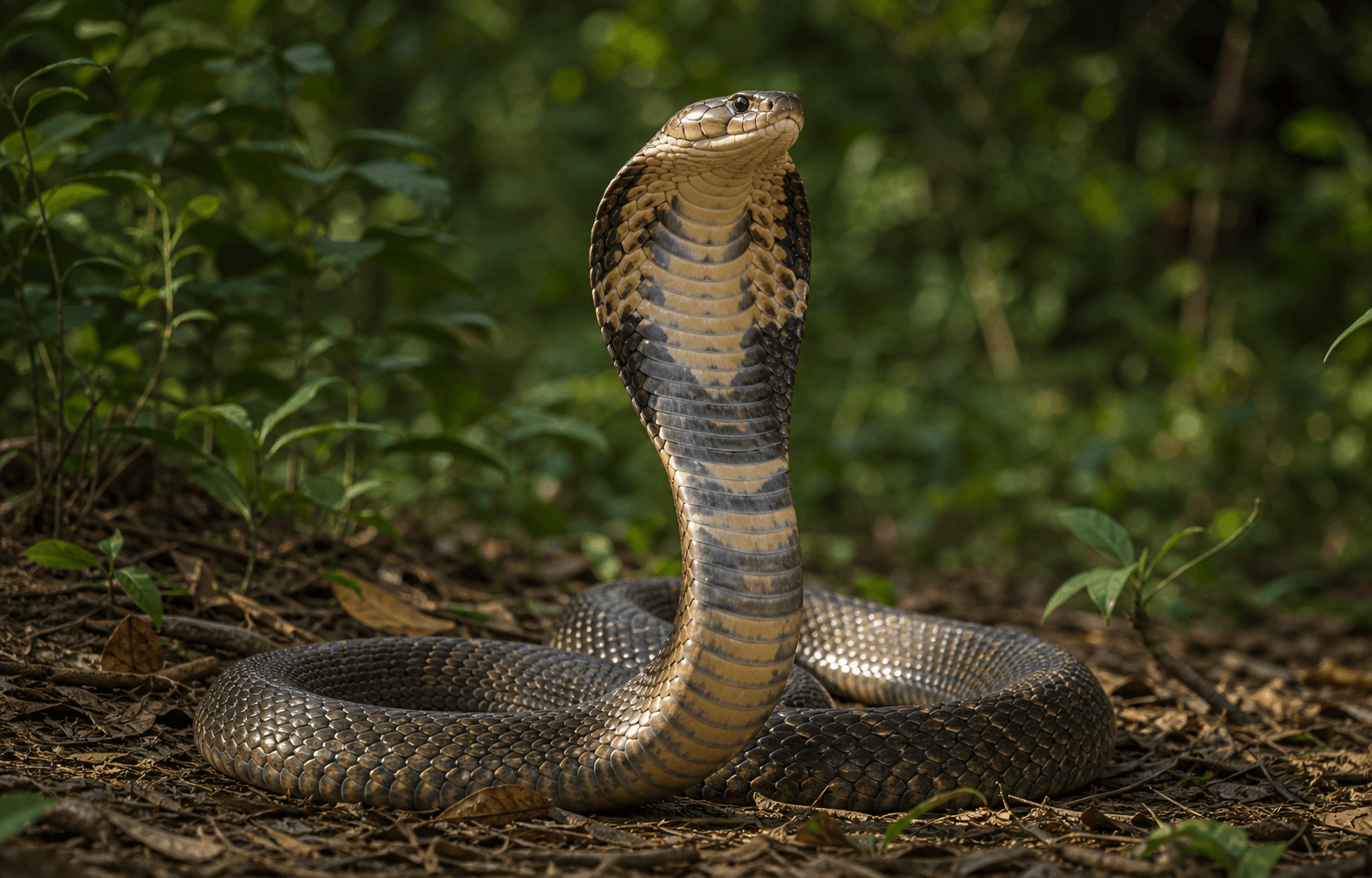
King Cobra
- Main Regions
- South Asia, Southeast Asia
- Habitat
- Forests, bamboo thickets, wetlands, plantations, farm edges
- Key Traits
- Longest venomous snake, raised hood, snake specialist
- Reality Note
- King cobras usually avoid people but can become defensive if threatened.
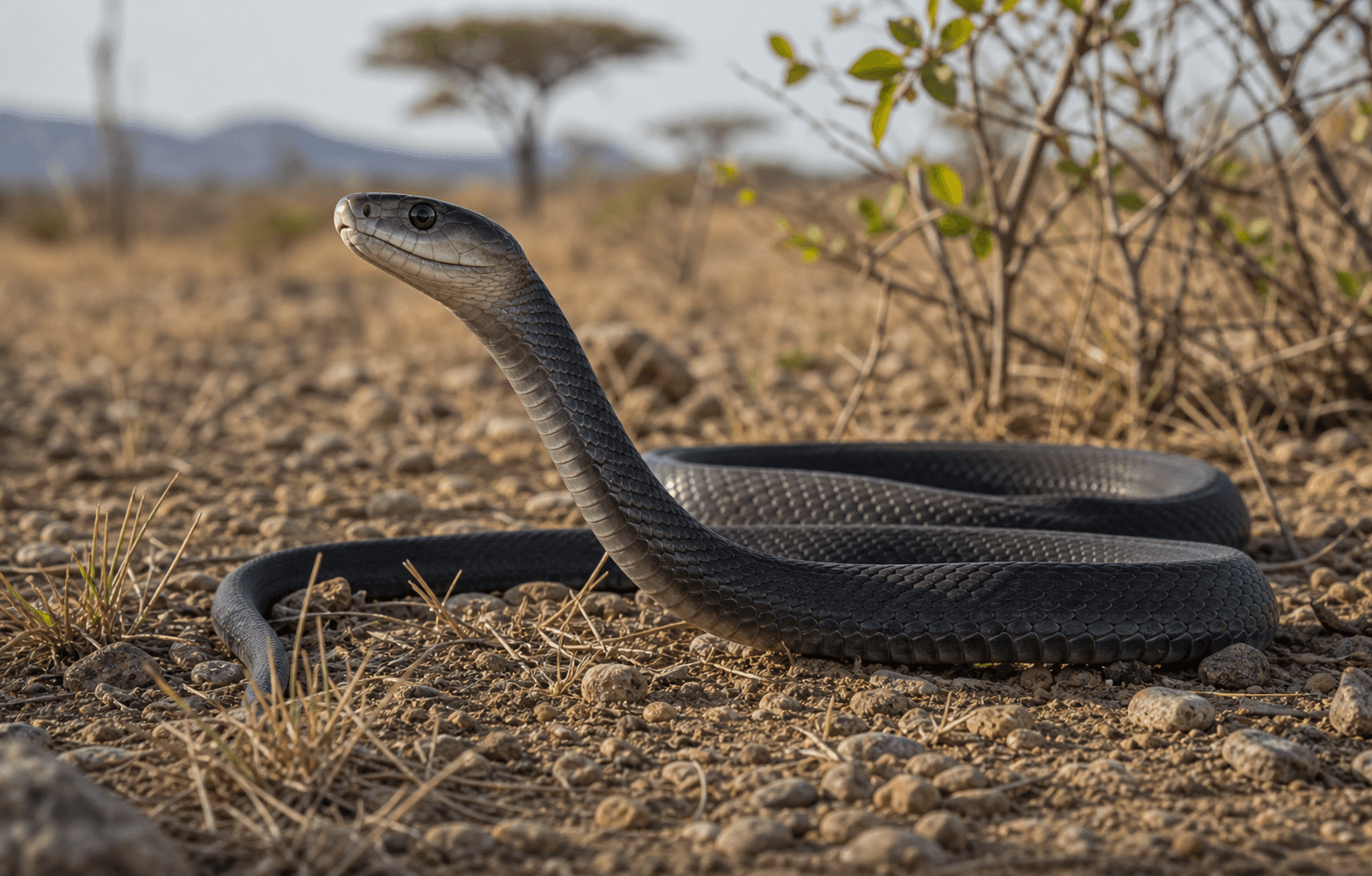
Black Mamba
- Main Regions
- Eastern and Southern Africa
- Habitat
- Savannas, rocky hills, scrub, open woodland
- Key Traits
- Fast movement, alert behavior, powerful venom
- Reality Note
- Black mambas usually avoid conflict but can be dangerous if cornered or surprised.
Habitat and Range
Where Each Snake Fits on the Map
Where King Cobras Live
King cobras are mainly Asian snakes linked with warm forests, bamboo thickets, wetlands, plantations, and farm edges where cover and reptile prey are available.
Where Black Mambas Live
Black mambas are African snakes often associated with savannas, rocky hills, scrub, and open woodland where speed, shelter, and alertness matter.
Fear vs Context
Which Snake Is More Feared?
The king cobra may feel more dramatic because of its hood, height, and status as the longest venomous snake. The black mamba may feel more frightening because of speed and reputation.
Real-world risk depends on location, behavior, medical access, local knowledge, and whether people try to catch or kill snakes. For learning, the better question is what each animal is adapted to do.
Why They Are Misunderstood
Warning displays are survival tools. A snake that lifts its body, spreads a hood, opens its mouth, or takes a defensive posture is usually communicating that it wants space.
Snakes are not villains. King cobras and black mambas are predators adapted to different landscapes, and both are best understood with respect and distance rather than panic.
Practical Educational Context
In areas where venomous snakes live, avoid handling wild snakes, use care around brush or stored materials, and contact trained local help when a dangerous snake is near homes, schools, or workplaces.
BeastAtlas does not provide emergency advice, medical advice, or location-specific safety guarantees. Presence Scores are simplified educational estimates, not exact counts or safety guarantees.
Reality Note
King cobras and black mambas both play ecological roles by hunting other animals and helping balance food webs. They deserve respect, not panic.
Related BeastAtlas Pages
Presence Scores are simplified educational estimates. They are not exact population counts or safety guarantees.