
Ocean Wildlife Guide
Dangerous Animals of the Ocean: Sharks, Jellyfish, Stonefish, and More
Explore eight remarkable marine animals through habitat, behavior, ecological importance, realistic risk, and the difference between informed caution and ocean myth.
Back to guidesThe Ocean Is a Network of Very Different Habitats
The ocean covers an enormous range of environments, from sunlit tropical shallows and coral reefs to continental shelves, rocky shores, estuaries, open water, and dim seafloors. Animals that share a dramatic reputation may rarely share the same daily habitat. A great white shark following prey through productive coastal water, a stonefish resting on a reef floor, and a box jellyfish moving through warm shallows belong to very different ecological stories.
Most ocean wildlife does not seek conflict with people. Realistic risk usually depends on location, season, water conditions, accidental contact, handling, fishing activity, or entering an animal's habitat without noticing it. This guide connects eight famous animals with where they live, how they behave, and why they matter, replacing monster stories with informed respect.
Featured Animals
Eight Ocean Animals With Different Habitat Stories
Habitat Context
Open Water, Reefs, Shores, Seafloors, and Estuaries
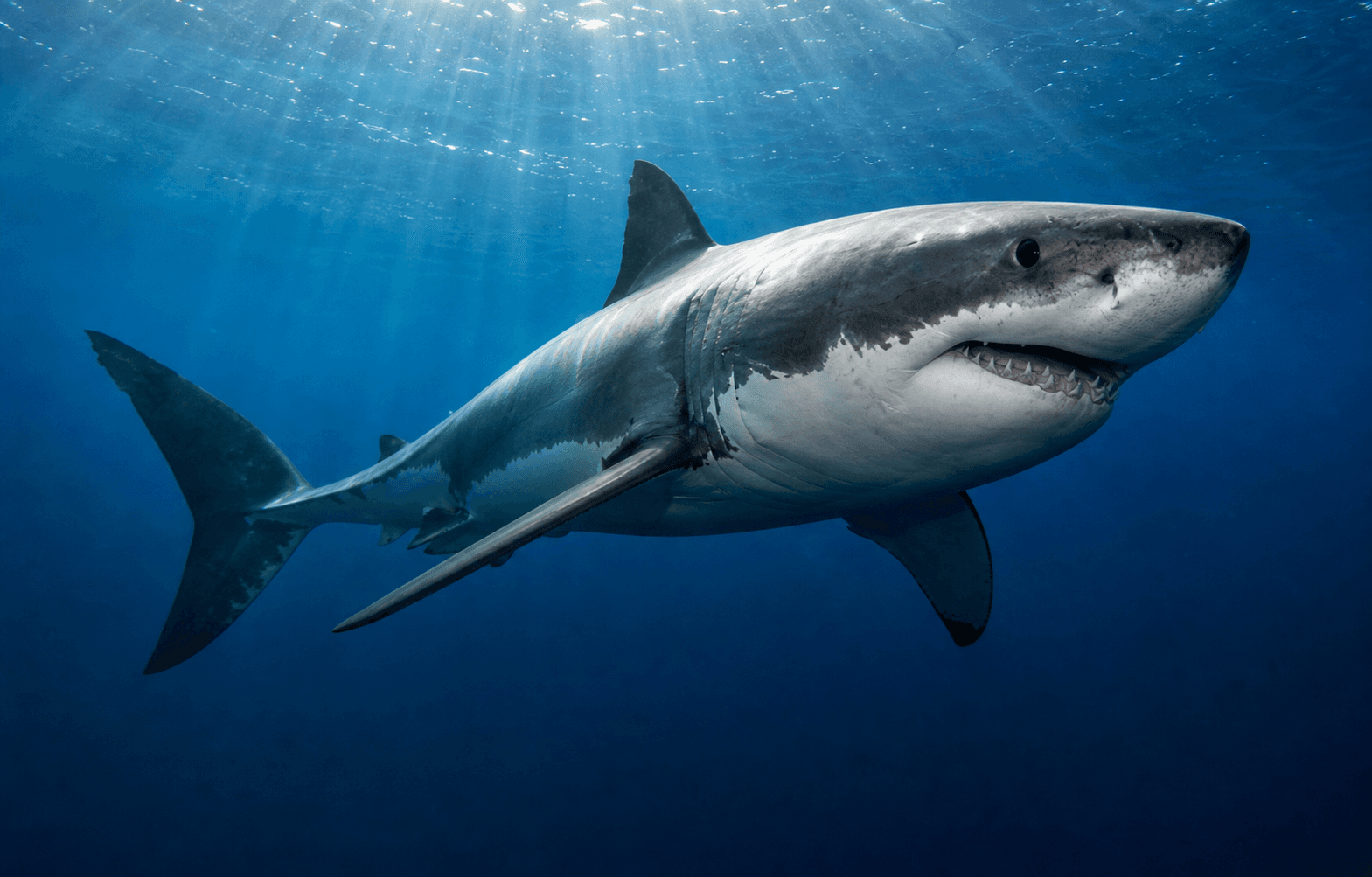
Open Ocean and Continental Shelves
Wide-ranging sharks follow temperature, currents, migration routes, and prey across offshore water and productive continental shelves. A large range does not mean equal presence everywhere within it.
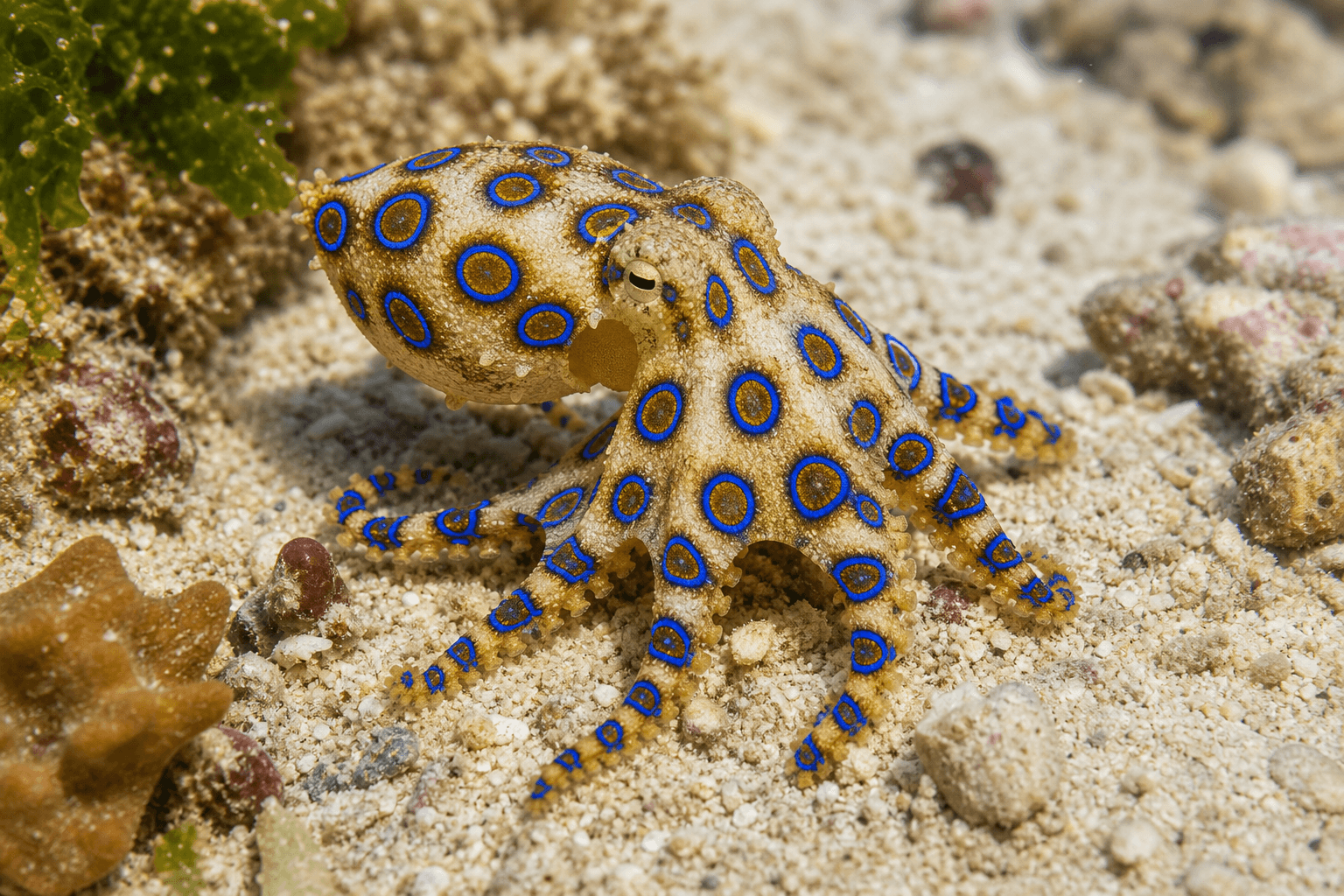
Coral Reefs and Rocky Shores
Reef rubble, tide pools, crevices, shells, and rocky shallows provide food and shelter for octopuses, cone snails, stonefish, and many animals that are easy to miss unless left undisturbed.
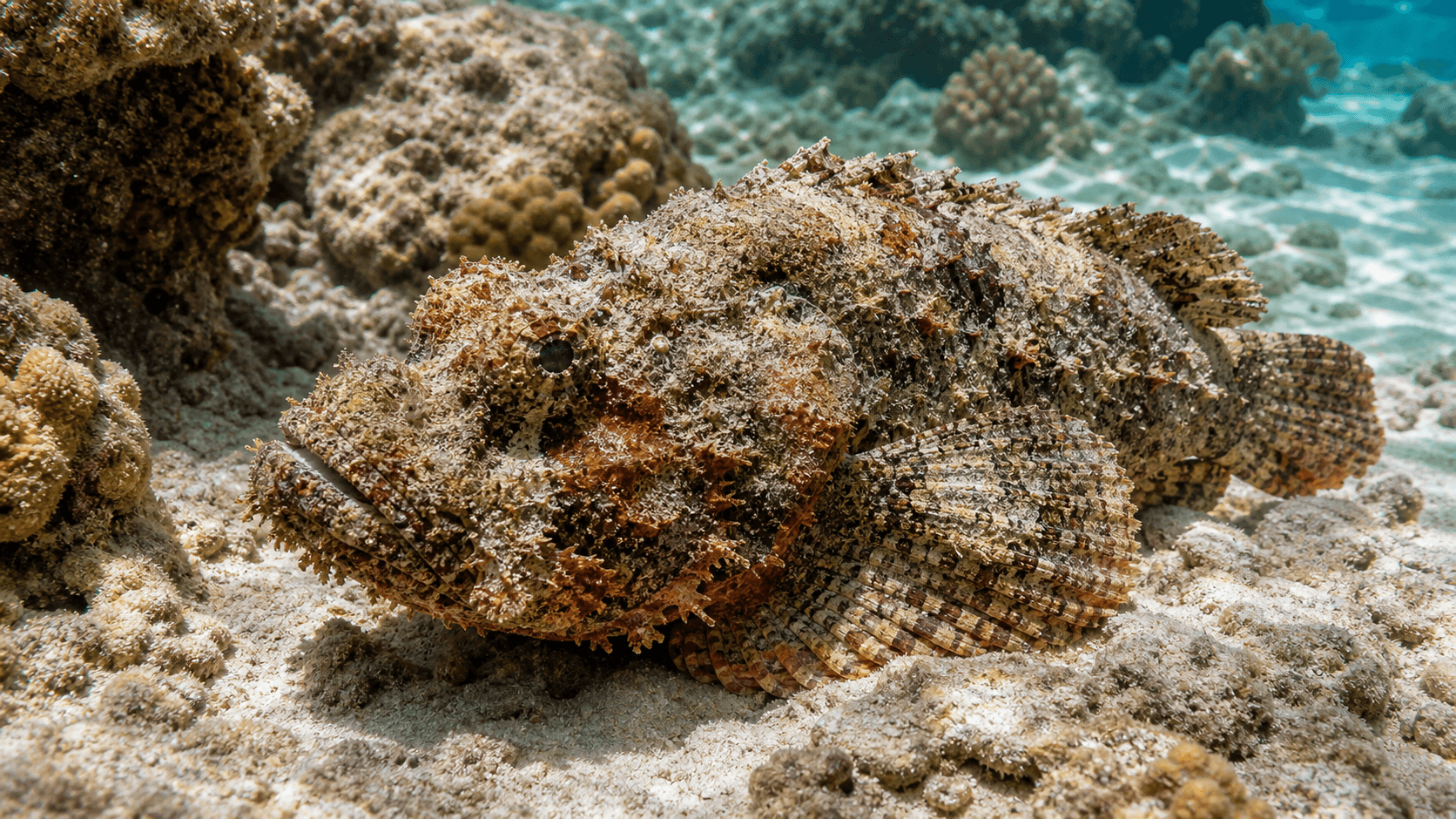
Seafloors, Sand, and Rubble
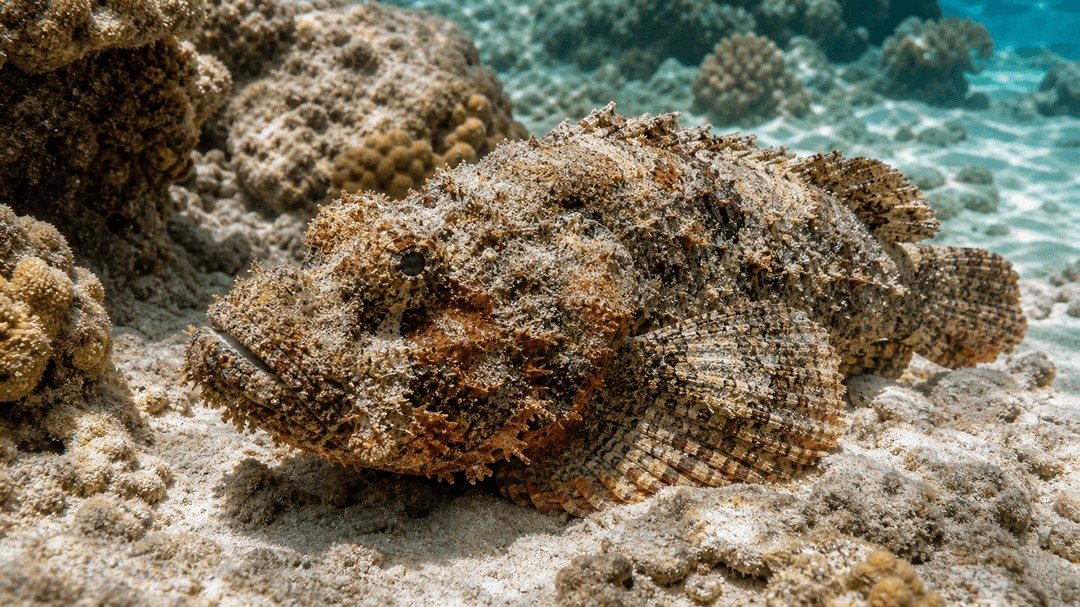
Camouflage matters on sandy, muddy, and rubble-covered bottoms. Stonefish rest within this visual complexity, making accidental contact more relevant than pursuit or aggression.
Tropical Shallows, Estuaries, and Coasts
Warm bays, creek mouths, estuaries, reef flats, and beaches can bring people and marine wildlife into the same space. Species, seasons, tides, and official local advice determine the real context.
Animal Profiles
Behavior, Ecology, and Realistic Risk
Great White, Tiger, and Bull Sharks
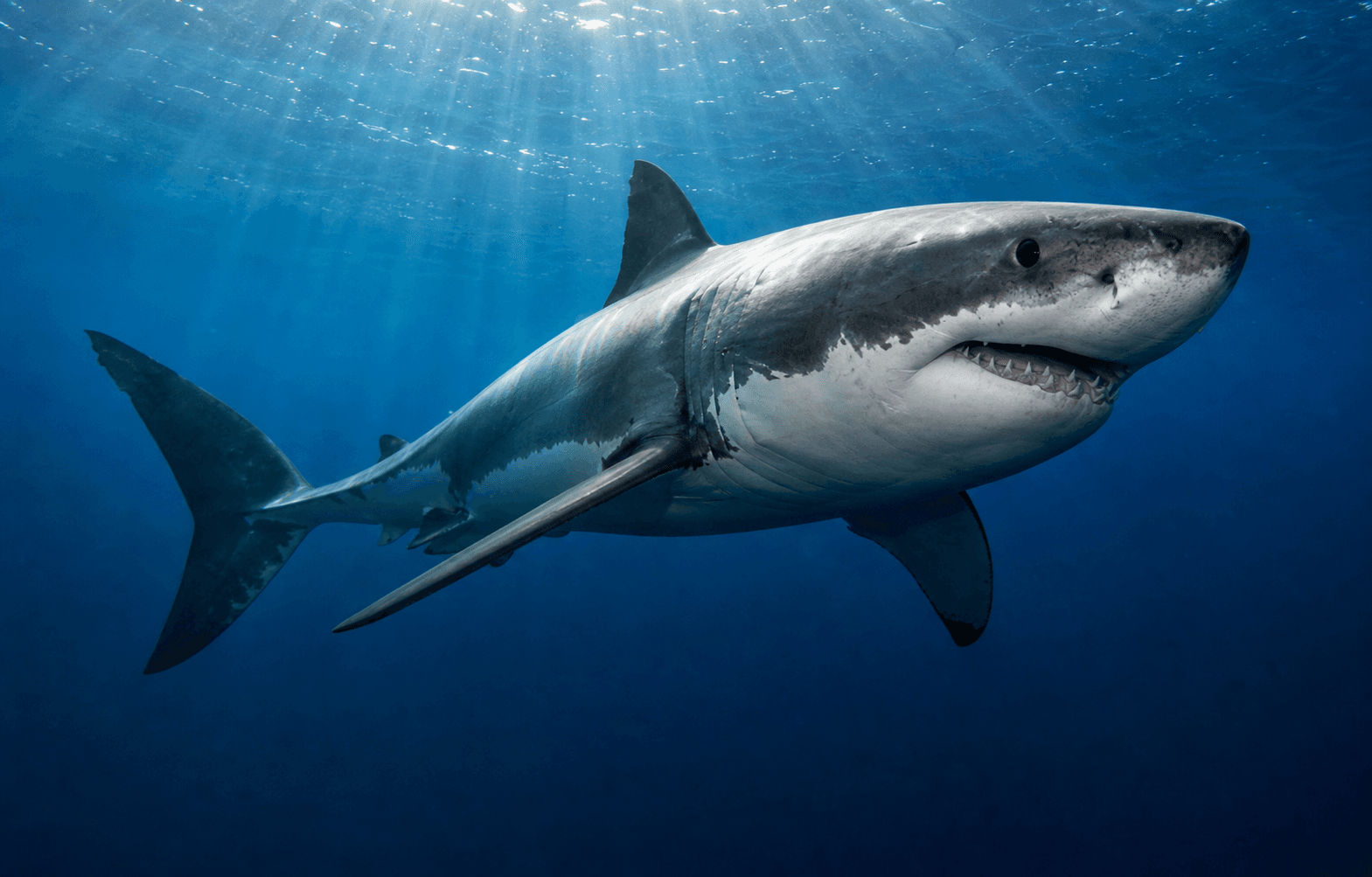
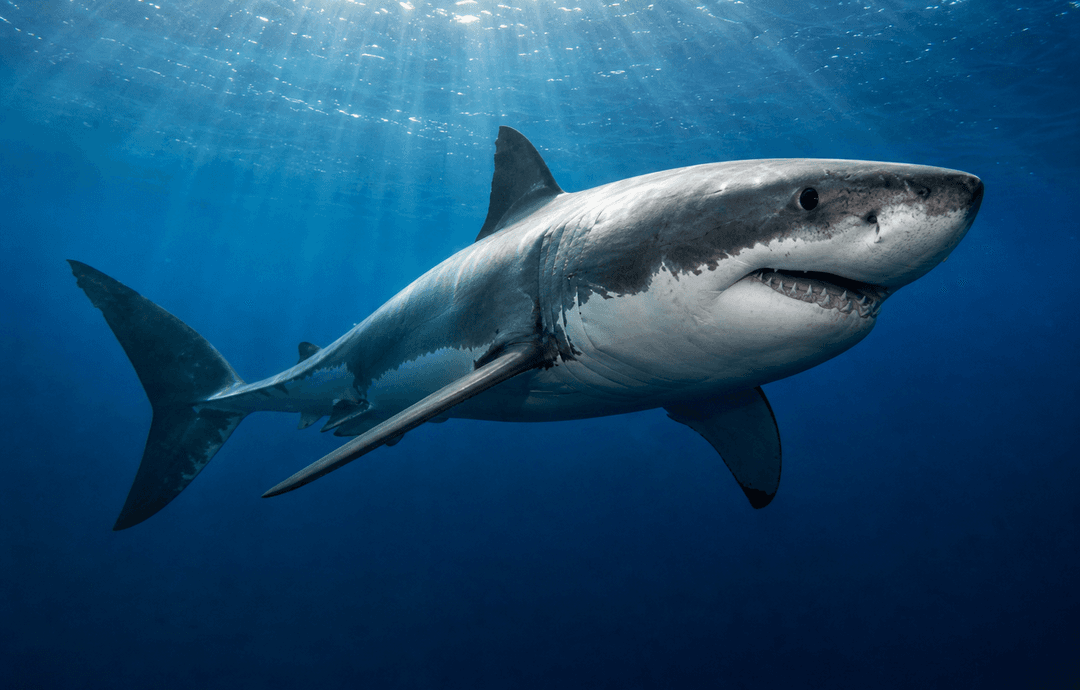
Great white sharks are associated with temperate and subtropical coastal waters, productive continental shelves, islands, and offshore areas where seals, fish, and other prey gather. They can travel across open ocean, but they are often discussed near coasts because shelves and current systems concentrate food. Great whites are active predators and scavengers that help shape marine food webs; their presence reflects a functioning ocean rather than a coastline patrolled for people.
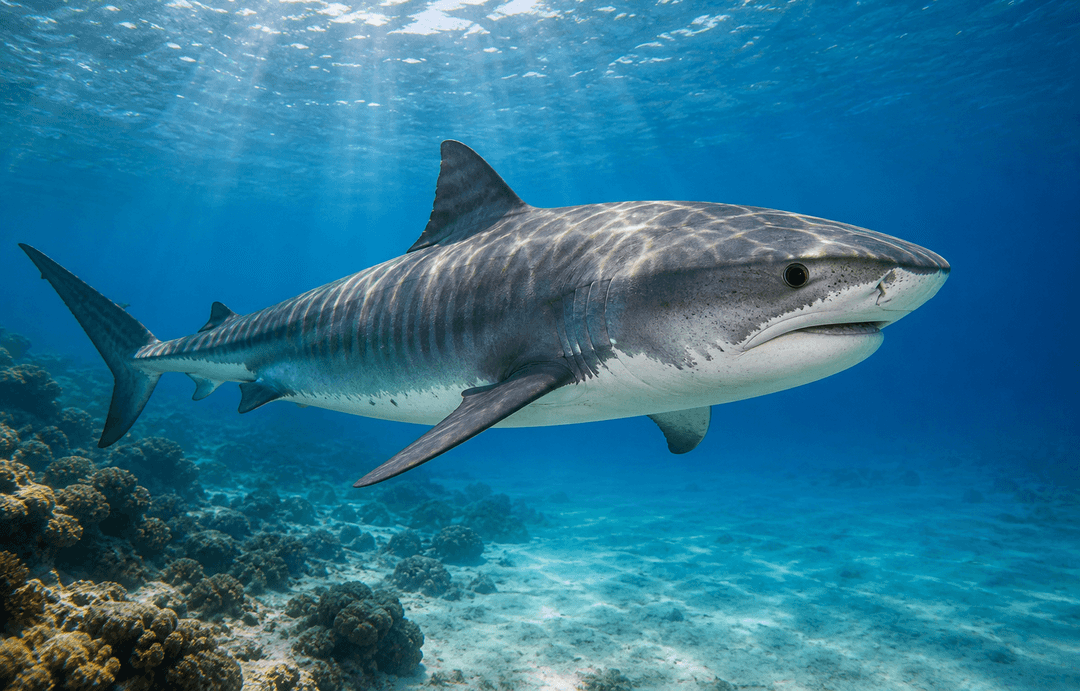
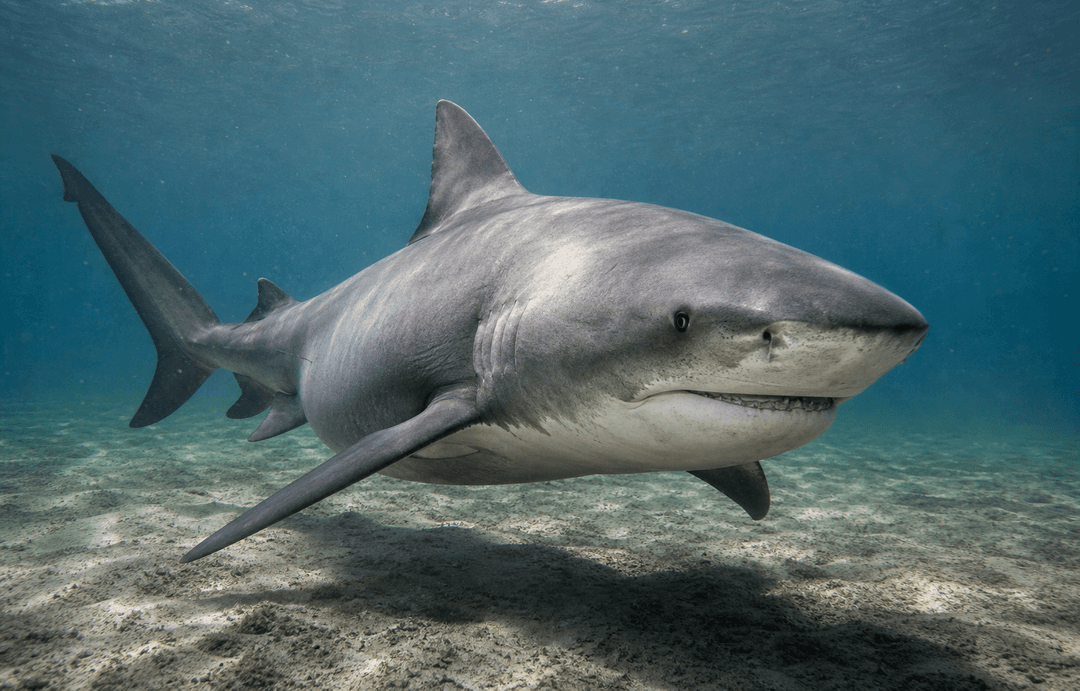
Tiger sharks are strongly linked with warm tropical and subtropical seas. They use coral reefs, island slopes, continental shelves, coastal waters, and sometimes deeper offshore habitat. Bull sharks often use warm, shallow coasts, bays, estuaries, and river-influenced water, tolerating changes in salinity that many sharks avoid. These habitat differences are more useful than ranking the three as villains. Most shark species do not threaten people, and even large sharks normally investigate and hunt natural prey rather than humans.
Box Jellyfish in Tropical Coastal Water
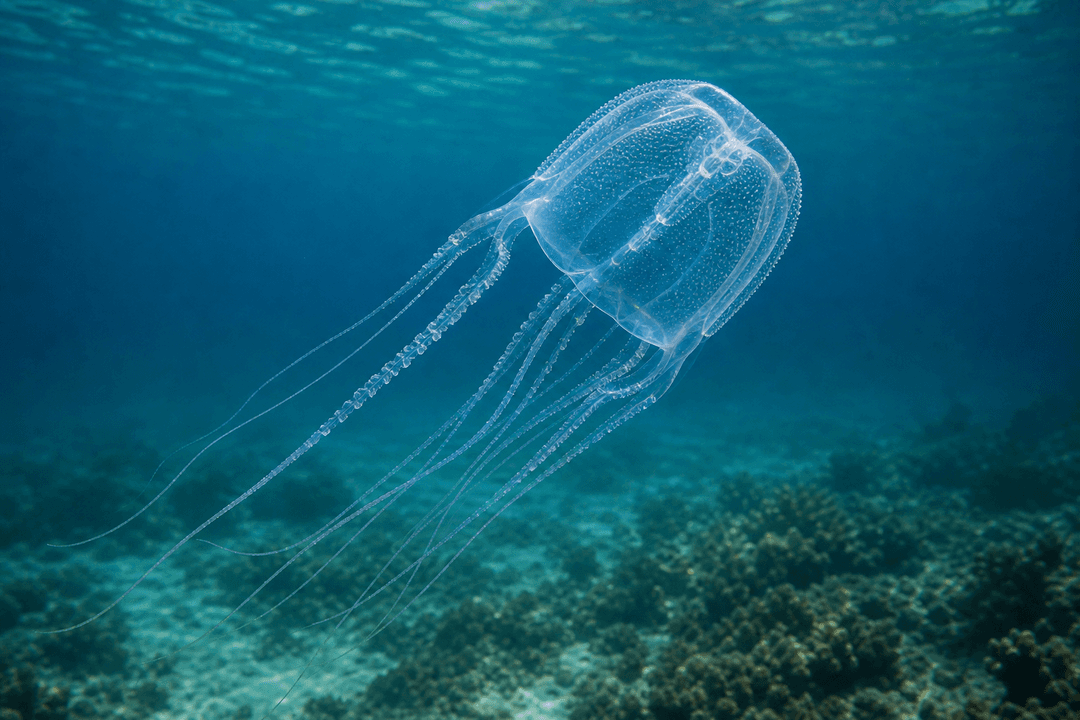
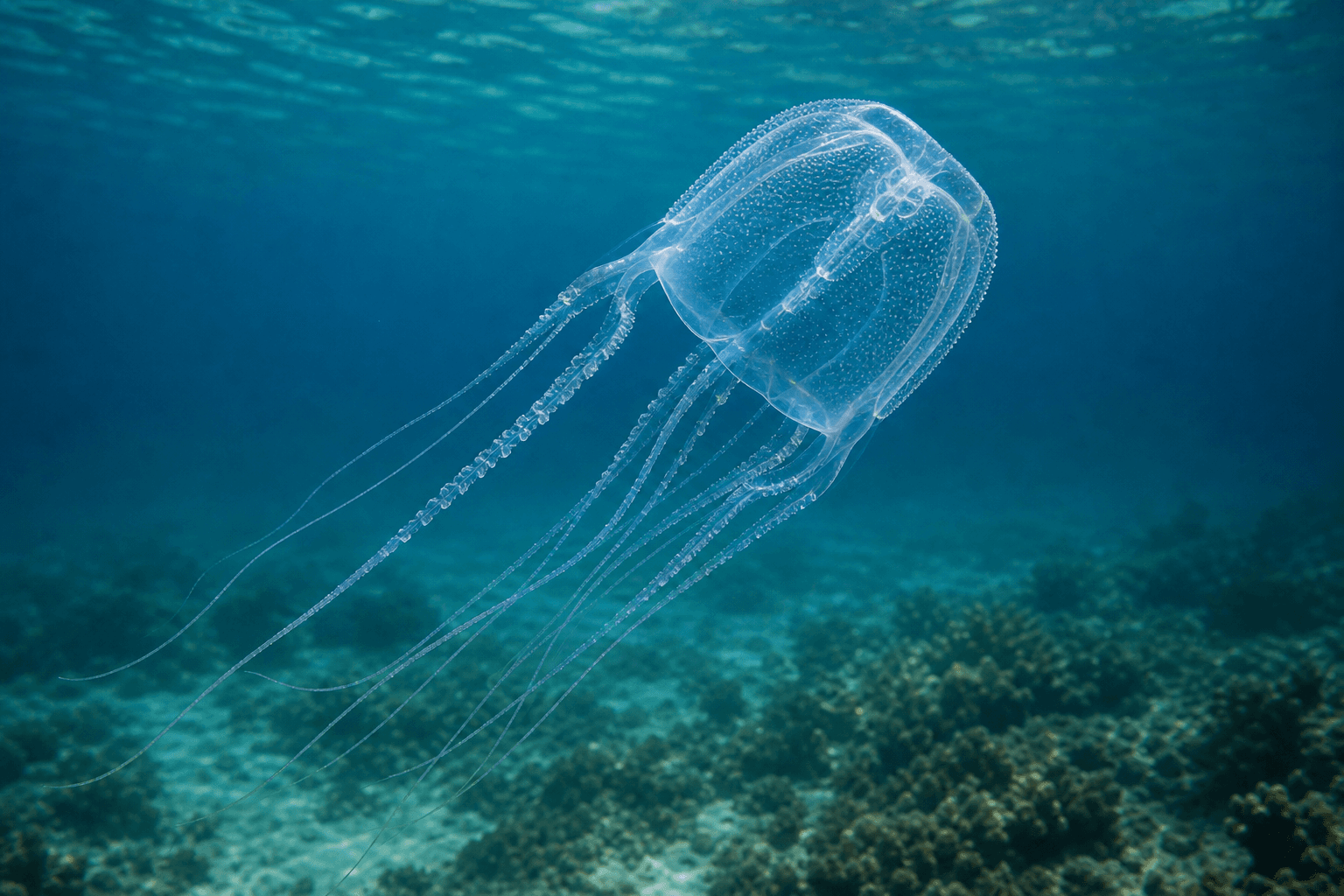
Box jellyfish are a group of cube-shaped jellyfish found mainly in warm marine regions. The species most often discussed in safety guidance are associated with tropical coastal waters, bays, creek mouths, beaches, and sheltered shallows, especially in parts of the Indo-Pacific. Their presence can change with season, weather, currents, and local water conditions, which is why a broad world map cannot replace beach notices or local expertise.
Jellyfish do not chase swimmers. Their tentacles contain stinging cells used to capture small prey and for defense, and harmful contact is usually accidental. Not every box jellyfish species has the same medical importance, just as not every jellyfish sting has the same effect. Jellyfish are predators and prey within marine food webs, and their transparent bodies are adaptations for ocean life rather than signs of something supernatural.
Blue-Ringed Octopuses and Geography Cone Snails
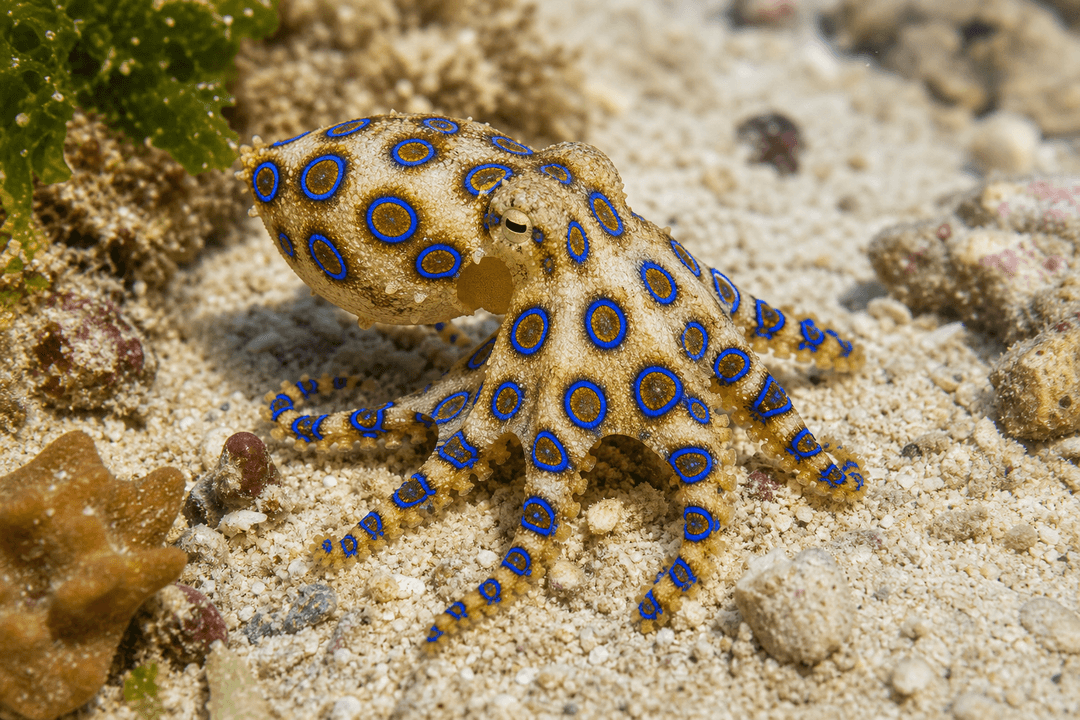
Blue-ringed octopuses live in shallow Indo-Pacific coastal habitats, including tide pools, rocky reefs, coral rubble, shells, crevices, and seagrass edges. They are small, secretive hunters of crustaceans. Their bright blue rings become especially vivid as a warning display when the animal is disturbed. They do not pursue people; the realistic concern is close contact, picking one up, or placing a hand into shelter without seeing it.
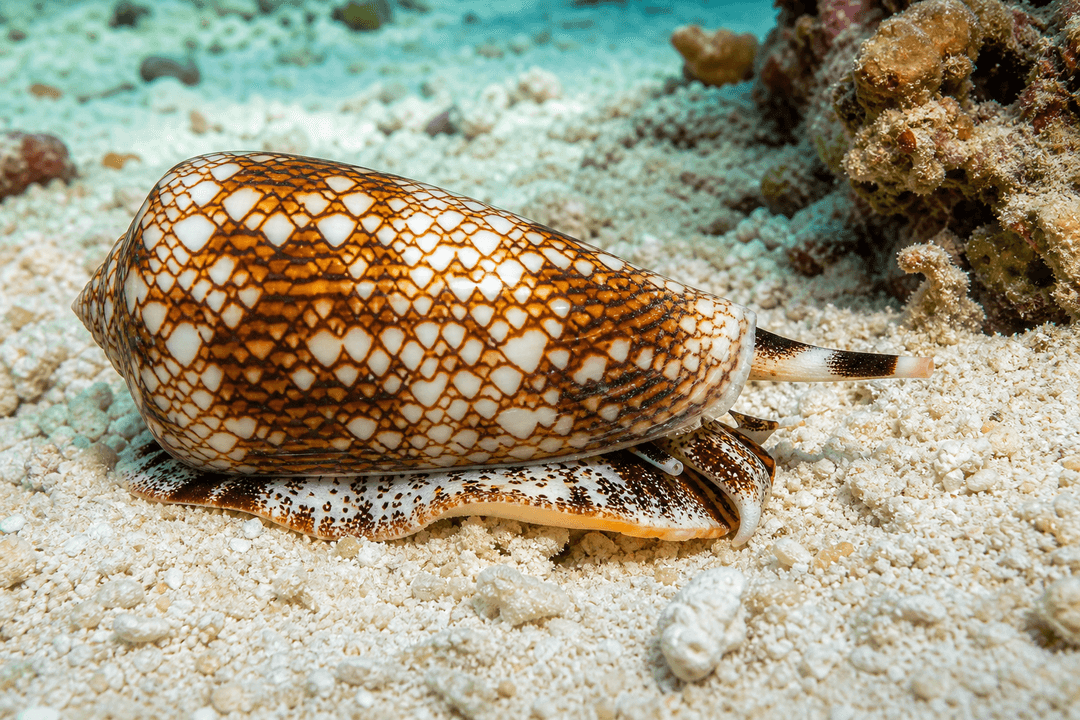
The geography cone snail lives in warm tropical marine habitats, especially around coral reefs, sandy reef margins, and rubble in the Indo-Pacific. Like other cone snails, it is a predator that uses a specialized venom-delivering tooth to capture prey. A beautiful shell may still contain a living animal, so handling is the key misconception to correct. Cone snails are not roaming beaches to attack people; they are slow marine hunters whose risk arises when they are collected or disturbed.
Stonefish and Beaked Sea Snakes
Stonefish are masters of camouflage on tropical Indo-Pacific seafloors. They may rest among coral rubble, rocks, sand, mud, reef flats, and shallow coastal bottoms where their shape and color resemble the surroundings. Venomous dorsal spines are defensive rather than hunting weapons. Accidental pressure from a foot or hand is the classic risk context, not an animal launching an attack. Stonefish are ambush predators of smaller marine animals and part of complex reef and seafloor food webs.
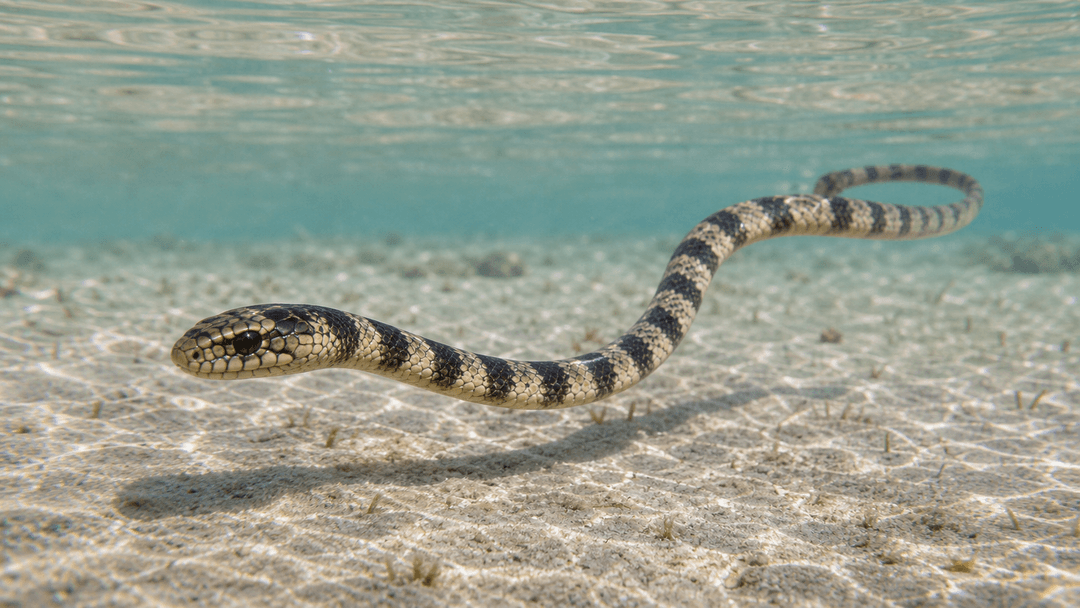
Beaked sea snakes use warm coastal waters of the Indian Ocean and western Pacific region, including shallow seas, estuaries, mangrove-influenced water, and soft-bottom areas where fish are available. They are venomous air-breathing reptiles adapted to marine life. Sea snakes are often described as extremely aggressive, but that broad claim is misleading. Encounters usually depend on fishing nets, handling, crowding, or accidental close contact, and the correct response is distance rather than panic.
How Habitat Works
From Open Ocean to Estuary: Habitat Changes the Story
Open ocean and continental shelves create space for wide-ranging sharks, but even these animals follow currents, temperature, prey, migration routes, and productive feeding areas. Coral reefs and rocky shores add shelter and hunting grounds for tiger sharks, blue-ringed octopuses, cone snails, and many smaller animals. On seafloors, camouflage becomes especially valuable, helping stonefish wait for prey while avoiding notice.
Tropical shallows, estuaries, and coastal waters are places where human recreation, fishing, and marine habitat overlap. Bull sharks, some box jellyfish, stonefish, and beaked sea snakes may all be relevant in parts of these broad environments, but not necessarily in the same region, season, or conditions. A habitat label shows possibility, not a live warning. Local signs and observations provide the missing detail.
Regional Examples
Regional Examples Across the World's Oceans
Temperate coasts of southern Africa, southern Australia, New Zealand, and parts of the Americas help illustrate great white shark habitat, while warmer tropical and subtropical oceans bring more tiger shark context. Bull sharks show why estuaries and river-influenced coasts deserve their own category. These are broad examples, not promises that an animal is present at every beach within a region.
The tropical Indo-Pacific connects many of the smaller venomous animals in this guide. Northern Australian and Southeast Asian coastal waters provide box jellyfish context; reef systems and rocky shallows across parts of the Indo-Pacific support blue-ringed octopuses, cone snails, and stonefish; and warm northern Indian Ocean and western Pacific coasts form part of the beaked sea snake story. Local species, seasons, and guidance remain more important than a global list.
Myth and Reality: Venomous Is Not the Same as Poisonous
A venomous animal delivers toxins through a specialized structure such as a sting, spine, fang, or venom-delivering tooth. Box jellyfish, blue-ringed octopuses, geography cone snails, stonefish, and beaked sea snakes are venomous. Poisonous usually describes an organism that is harmful when its toxins are eaten, touched, or otherwise absorbed rather than actively delivered. Calling every harmful marine animal poisonous hides an important biological difference.
Other myths also remove context. Sharks are not mindless hunters of people, jellyfish do not chase swimmers, cone snails do not fire across beaches, sea snakes are not constantly trying to bite divers, and stonefish do not leap from the seabed. Each animal has a normal ecological life. Risk rises in particular places and situations, especially accidental contact or handling, not simply because the animal exists.
Practical Ocean Safety Context
BeastAtlas is an educational guide, not a live beach-warning or medical service. For a real coast, reef, boat trip, or dive, follow lifeguards, park staff, tour operators, fisheries guidance, posted closures, and local wildlife authorities. Conditions can change faster than a general article can. Supervised swimming areas and region-specific advice are more useful than trying to memorize a worldwide danger ranking.
Calm habits support both people and wildlife: do not handle unfamiliar marine animals or shells, give large animals space, avoid placing hands into unseen reef crevices, watch where feet go in shallow natural areas, and do not interfere with animals caught in fishing gear unless trained guidance is available. If contact or injury occurs, seek local emergency help rather than relying on a general wildlife page.
Presence Scores for Ocean Animals
BeastAtlas Presence Scores are simplified educational estimates. They are not exact population counts, live tracking, beach forecasts, or safety guarantees. A high score means an animal is strongly associated with a broad region or habitat in the BeastAtlas learning model. It does not mean the animal is near a particular swimmer, shoreline, reef, or boat.
Ocean presence is especially dynamic because currents, temperature, prey, tides, seasons, storms, migration, and water quality can all influence animal movement. Read a score alongside habitat and regional context, then use official local information for real-world decisions. The score starts a geography lesson; it does not finish a safety assessment.
FAQ: Dangerous Ocean Animals
Are most sharks dangerous to people?
No. Most shark species do not threaten people. Even the large species in this guide normally hunt natural prey, and realistic risk changes with species, location, visibility, prey activity, fishing, and local ocean conditions.
Do jellyfish chase swimmers?
No. Jellyfish move by pulsing and are also carried by currents. Stings happen when tentacles and skin make contact, often accidentally. Species and local conditions matter, so posted beach guidance is more useful than a general fear of all jellyfish.
Are cone snails dangerous from a distance?
No. The practical concern is handling or collecting a living cone snail. It uses a specialized venom-delivering tooth to capture prey and defend itself; it does not hunt people or launch attacks across a beach.
Do sea snakes want to bite divers?
No. Sea snakes are marine predators, not people hunters. Close encounters can happen through nets, handling, crowding, or accidental contact. Give them space and follow local dive or fishing guidance.
Are stonefish poisonous or venomous?
Stonefish are venomous. Their defensive dorsal spines deliver venom when pressed. Poisonous usually refers to toxins that cause harm when eaten, touched, or absorbed rather than injected by a specialized structure.
Reality Note: Powerful Wildlife Is Part of a Healthy Ocean
Sharks help structure marine food webs, while jellyfish, octopuses, snails, fish, and sea snakes act as predators, prey, scavengers, or competitors in their own communities. Removing them from the story because they frighten us would erase important relationships. An animal can have defenses capable of harming a person and still be ecologically valuable, vulnerable to human pressures, or normally uninterested in us.
The ocean deserves specific, informed respect. Learn which habitat you are entering, notice local conditions, leave wildlife alone, and treat warnings seriously. That approach recognizes real risk without turning sharks, jellyfish, stonefish, or any other marine animal into a monster.
Learning Takeaway
The ocean is not one danger zone. It is a connected world of open water, continental shelves, coral reefs, rocky shores, seafloors, tropical shallows, estuaries, and coasts. Connect each animal to its habitat and behavior, leave wildlife undisturbed, and use current local guidance when entering the sea.
Related BeastAtlas Pages
Presence Scores are simplified educational estimates. They are not exact population counts or safety guarantees.